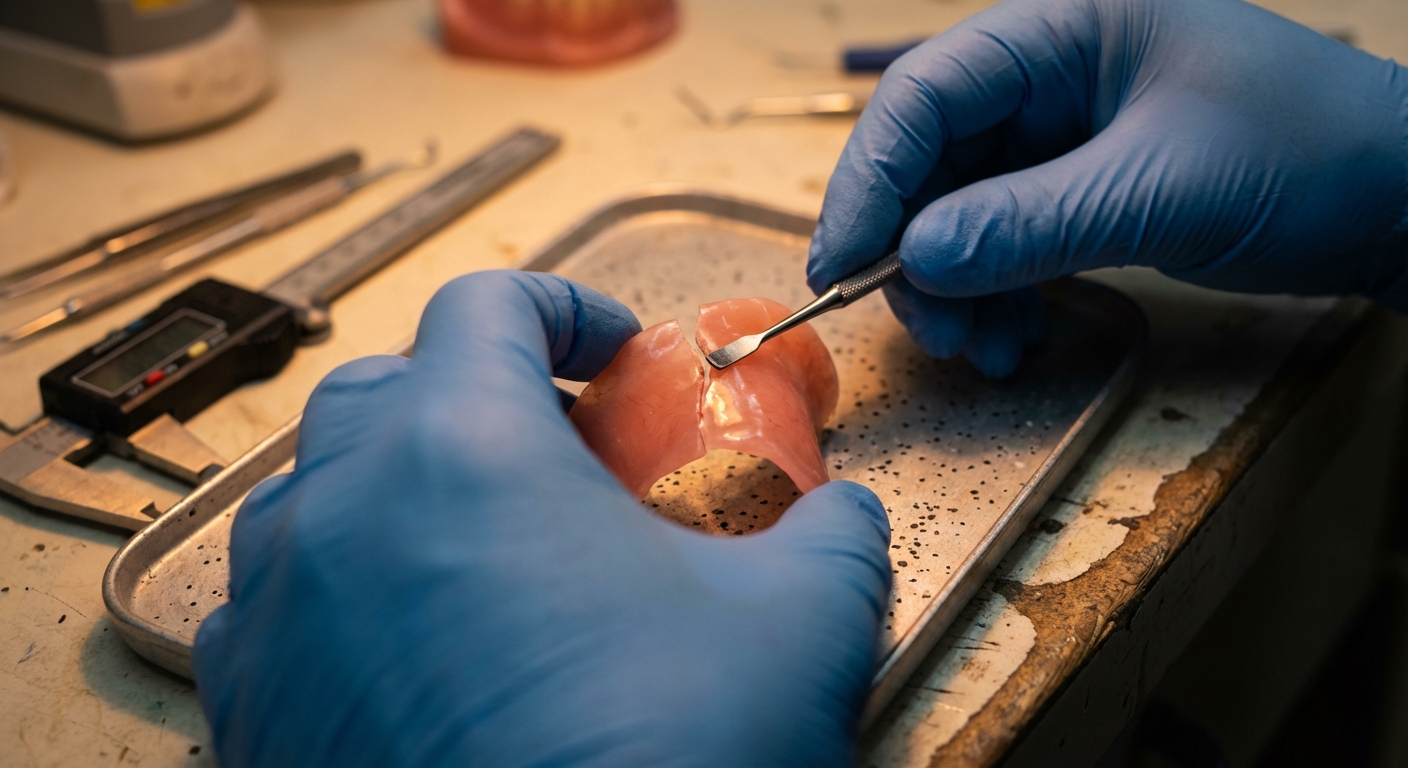
When a denture starts to feel loose, rub sore spots, or crack, most patients ask the same question: should I repair it, reline it, or replace it altogether? The wrong decision can waste money and prolong discomfort. The right one restores function quickly and protects long-term oral health.
This guide explains how dentists decide between denture repair, denture reline, and full replacement, including timelines, cost drivers, and practical warning signs. If you need a clinical assessment, Crown Dental Group offers dedicated denture repair and reline treatment for suitable cases.
Denture repair focuses on fixing damage to the denture itself, such as:
Repair is usually appropriate when the core fit and bite are still acceptable and the appliance can be restored safely without rebuilding from scratch.
A reline reshapes the inner fitting surface so the denture adapts better to current gum and bone contours. This is common when dentures feel loose over time due to natural tissue changes.
Relines can improve retention and reduce movement, especially in cases where the denture is intact but no longer fitting as it did initially.
In practice, some patients need both a repair and a reline. Others are better served by replacement if current dentures are already at end of service life.
If any of these are present, arrange a prompt assessment through the Crown Dental Group contact page. Delaying can turn a manageable fix into a more complex replacement case.
Over-the-counter glues and home adjustments can distort fit, damage materials, and complicate later professional repair. Some products are also unsuitable for long-term intraoral use. Even when a DIY fix looks stable initially, underlying stress points often remain.
Clinical repair protects both function and safety by addressing cause, not just surface damage.
Timing varies by complexity, material, and lab workflow. Minor repairs may be completed quickly, while relines or complex fractures can require additional steps for precision and durability.
Your dentist will usually prioritise urgency where function is significantly affected, then confirm expected turnaround and temporary coping advice.
Headline price alone can be misleading. A lower-cost patch may not be best value if it fails quickly or does not resolve the fit problem.
Replacement may be recommended when dentures have repeated fractures, severe wear, persistent looseness despite adjustment, or compromised aesthetics. In these cases, new records and a fresh prosthesis can deliver better comfort and function than repeated short-term fixes.
For patients concerned about lower denture stability, your clinician may also discuss implant-retained pathways as part of long-term planning.
Denture repair and reline are valuable when matched to the right clinical scenario. But not every failing denture should be repeatedly patched. The most cost-effective path is a diagnosis-led decision based on fit, structure, function, and future maintenance.
Clinical note: This article is general information and not a substitute for personalised dental advice.


No matter where you are in the south-east, expert care is just around the corner. All clinics offer online booking for your convenience.
With hundreds of 5-star reviews, we’re proud to be one of Melbourne’s most trusted names in dental and denture care.


Take the first step towards a healthier, more confident smile. Book online or contact your nearest Crown Dental Group clinic today.
Book Appointment