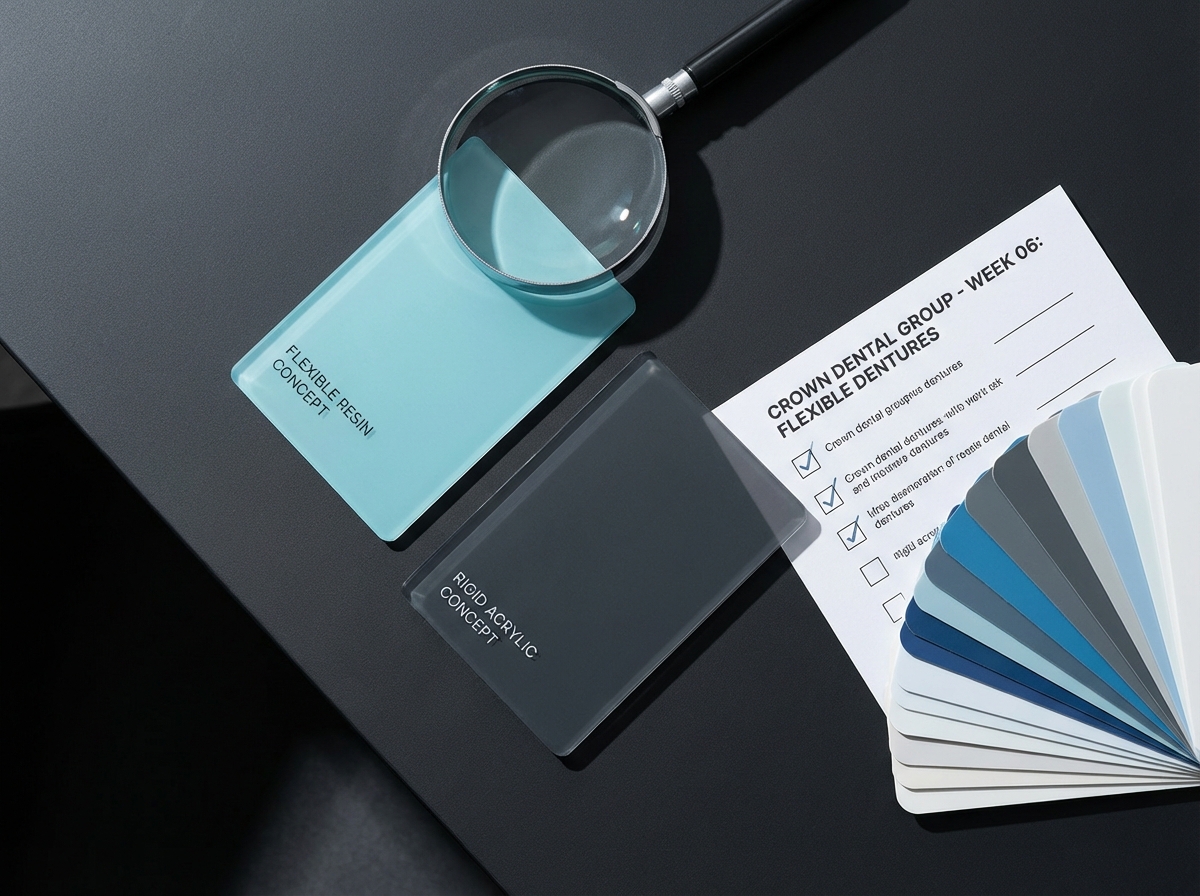
Flexible dentures are often promoted as a lighter, more comfortable alternative to traditional partial dentures. For the right patient, they can be a practical option. For the wrong case, they can create compromises in fit, function, or long-term maintenance. The key is understanding where flexible materials perform well and where conventional designs may still be the better clinical choice.
This guide explains how flexible dentures work, who they usually suit, where limitations appear, and what drives pricing in Australia. If you are comparing treatment paths, Crown Dental Group’s flexible dentures service page outlines the clinical process and assessment pathway.
Flexible dentures are removable partial dentures made from a thermoplastic nylon-like material rather than rigid acrylic. Their gum-coloured base is bendable, and retention often relies on flexible clasps that engage natural undercuts around teeth.
Key benefits include cosmetic clasping and lighter feel. Key limitations include reduced rigidity in high-load cases, more constrained repair pathways, and potential staining/odour retention if hygiene is poor.
Acrylic partials are usually easier to reline/repair. Flexible partials can be more aesthetic and comfortable initially, but they are not universally better. Material choice should follow diagnosis, not preference.
Patients needing a removable partial with suitable undercuts, prioritising discreet aesthetics, and willing to maintain follow-up care may suit flexible dentures.
If you are weighing options in Narre Warren South or Ferntree Gully, request a tailored assessment via Crown Dental Group’s contact page. For broader replacement planning, review the dental implants information page to compare long-term pathways.
Clinical note: This article is general information and does not replace personalised dental advice.


No matter where you are in the south-east, expert care is just around the corner. All clinics offer online booking for your convenience.
With hundreds of 5-star reviews, we’re proud to be one of Melbourne’s most trusted names in dental and denture care.


Take the first step towards a healthier, more confident smile. Book online or contact your nearest Crown Dental Group clinic today.
Book Appointment